Category Archives: HOME

ENVIRONMENTAL SUSTAINABILITY IN GHANA: NOT A CHOICE BUT AN IMPERATIVE

Ghana acknowledges the crucial significance of environmental sustainability, viewing it not just as an option but as a must. Over the past few years, there has been a growing global recognition of the influence that human activities have on the environment. Climate change is widely regarded as the most intricate and grave environmental problem that human cultures have ever confronted. The scientific evidence is clear and indisputable – human activities are impacting the climate system, leading to higher global average temperatures in both the air and oceans, extensive melting of snow and ice, and a rise in global sea levels (IPCC, 2007). These environmental concerns have the potential to become significant social and economic disasters.

Ghana has pledged to decrease its greenhouse gas emissions and improve its ability to adapt to climate change. Although Ghana’s per capita emissions only account for 24% of the global average, the country has the potential to pursue a resilient growth track. This entails the avoidance of expensive dependencies, the adoption of state-of-the-art technologies, and the mobilization of climate money.

The repercussions of unregulated industrialization and unsustainable practices are becoming more evident, prompting a worldwide transition towards sustainable development and environmental accountability. Logistics is a crucial industry that is at the forefront of this transformation. It encompasses a complex system of operations that are responsible for the transportation of goods, services, and information.

Sustainability in the logistics industry of Ghana

Logistics serves as the fundamental support system for a contemporary economy, enabling the exchange of goods, enhancing competitiveness, and generating employment opportunities (Thomas Hellmuth-Sander, 2023). Logistics plays a crucial role in Ghana’s fast-growing economy by facilitating the interconnection of various businesses and enabling the country’s integration into the global market. It guarantees the efficient and successful delivery of domestically created or imported items to consumers. Although the economic advantages of logistics are unquestionable, it is imperative not to overlook the environmental consequences it entails.

The Importance of Sustainable Practices: Logistics plays a substantial role in causing environmental deterioration on a global scale through numerous means. The transportation of commodities is heavily dependent on fossil fuels, leading to the release of greenhouse gases and the polluting of the air. Furthermore, the presence of ineffective logistical systems results in heightened levels of traffic congestion, noise pollution, and energy inefficiency. The trash produced from the packing, handling, and distribution of products also contributes to the escalating environmental issues. In Ghana, a country already under strain on its natural resources, the detrimental effects of logistical activities might worsen the destruction of ecosystems and jeopardize the welfare of its population.

Nevertheless, the adverse environmental impact caused by conventional logistics practices, including significant carbon dioxide emissions and depletion of resources, requires a transition towards environmentally friendly logistics. Utilizing DCSA standards can operate as a model for incorporating technology and sustainable methods, thereby decreasing the environmental impact while improving effectiveness. It is crucial to foster collaboration among stakeholders, allocate resources to renewable energy, and give priority to educating people about sustainable practices. Ghana’s pursuit of green logistics not only conforms to the Sustainable Development Goals (SDGs) but also establishes a standard for environmental responsibility throughout Africa.

A major obstacle to the adoption of environmentally friendly logistics techniques in Ghana is the absence of suitable legislation and regulations that promote eco-friendly activities. In the absence of a legislative framework that provides incentives for environmentally friendly activities, firms may emphasize immediate financial gains at the expense of long-term ecological sustainability. Furthermore, logistics organizations and stakeholders suffer from a dearth of knowledge and understanding regarding the advantages and prospects of sustainable logistics. This lack of understanding exacerbates the hinderance of implementing ecologically sustainable methods.

The core of sustainability initiatives in logistics is around the concept of green logistics. Green logistics encompasses the thorough optimization of strategies, systems, structures, and procedures to establish a commodities management system that is more environmentally sustainable. The emphasis lies not only on the environmental ramifications of logistics, but also on enhancing the overall process to be more resource-efficient and ecologically sustainable.

Urban logistics, which is a significant sub-sector of the broader logistics industry, shows potential for promoting environmental sustainability. Implementing strategies such as combining urban freight movement, utilizing low-emission vehicles, introducing intelligent transport networks, and encouraging eco-friendly driving practices can greatly diminish the environmental impact of logistics. Nevertheless, these approaches necessitate substantial involvement and cooperation from all parties involved.

Advancing: policy, innovation, and education

Establishing a sustainable and eco-friendly logistics industry in Ghana necessitates a comprehensive and multifaceted strategy. The primary focus should be on implementing efficient policies and regulations that encourage and require the use of environmentally friendly logistical methods. By establishing a legal framework that incentivizes sustainability, corporations are more inclined to give priority to environmentally friendly activities.

Both innovation and the implementation of state-of-the-art technologies are crucial. The utilization of digital platforms, intelligent devices, and sustainable energy sources has the potential to completely transform logistics operations, enhancing their efficiency and minimizing their ecological footprint. Sustainable logistics can be further enhanced by implementing circular economy models that prioritize recycling and waste prevention.

Education and awareness are crucial factors. Logistics companies and stakeholders must comprehend the advantages of sustainable operations, not just for the environment but also for their own enduring sustainability. Workshops, seminars, and campaigns have the potential to narrow the knowledge gap and promote the use of environmentally friendly logistics techniques.

Conforming to the Sustainable Development Goals (SDGs)

Ghana’s pursuit of sustainable logistics presents a valuable opportunity for the country to make substantial contributions to global initiatives like the Sustainable Development Goals (SDGs) and the Paris Agreement on climate change. The United Nations has established the Sustainable Development Goals, which encompass aims pertaining to economic growth, social development, and environmental protection. Sustainable logistics aligns with multiple Sustainable Development Goals, specifically Goal 9 (Industry, Innovation and Infrastructure) and Goal 13 (Climate Change Mitigation).

Due to the pressing nature of the crisis, stakeholders in the logistics industry are being urged by multiple sources to implement sustainable practices. Sustainability, in this context, pertains to the seamless incorporation of economic, social, and environmental factors across the entire logistics process. The objective is to minimize adverse effects while maximize beneficial results. Nevertheless, the adoption of sustainable logistics strategies encounters multiple obstacles in Ghana.

Examining the prospects of long-term environmental responsibility

In the future, it is possible for both environment and humans to not only coexist but even flourish together. However, the actualization of this goal depends on the pragmatic implementation and incorporation of scientific methodologies, technology, and regulations.

Sustainability and environmental responsibility are not mere trendy terms, but rather essential principles that must be incorporated into every aspect of human endeavour, including logistics. Ghana, with its expanding economy and rapidly developing logistics sector, is currently at a crucial point. The company has a decision between maintaining traditional, environmentally harmful logistical techniques or adopting sustainable, eco-friendly operations.

I firmly believe that with the implementation of efficient regulations, the promotion of innovation, and the encouragement of education, Ghana has the potential to take the lead in paving the path towards a more environmentally sustainable and economically prosperous future. By doing so, Ghana can demonstrate to the logistics industry that economic growth and environmental stewardship can be mutually beneficial.

To summarize, Ghana’s dedication to environmental sustainability is vital for its future welfare, ability to withstand challenges, and economic success.

References

Hellmuth-Sander, T.A. (2023). Circular economy: Unlocking the potential of sustainable logistics in Ghana. LinkedIn.

The Intergovernmental Panel on Climate Change (IPCC).

Sustainable Development Goals | United Nations in Ghana. https://ghana.un.org/en/sdgs

Ghana Can Turn Climate Challenges into Opportunities for Resilient and …. https://bing.com/search?q=environment+sustainability+Ghana

Ghana Country Environmental Analysis – Climate & Clean Air Coalition. https://www.ccacoalition.org/resources/ghana-country-environmental-analysis

Environment and Climate Change in Ghana: Policy Brief. https://www.undp.org/ghana/publications/environment-and-climate-change-ghana-policy-brief

Ghana Can Turn Climate Challenges into Opportunities for Resilient and …. https://www.worldbank.org/en/news/press-release/2022/11/01/ghana-can-turn-climate-challenges-into-opportunities-for-resilient-and-sustainable-growth-says-new-world-bank-group-report.

Contested Theory of Gender Identity

The contested theory of gender identity has been a topic of discussion and debate in various contexts. Let me provide some relevant information based on recent developments:

  1. UK Government’s Stance:
    • The United Kingdom’s government recently issued draft guidance to schools, instructing them to stop teaching children about gender theory (SCNR, May 16 2024).
    • The guidance aims to protect children from inappropriate teaching on sensitive topics.
    • It explicitly states that the contested theory of gender identity will not be taught.
    • Instead, schools will focus on factual and appropriate content related to relationships, health, and sex education.
    • Sex education will not be taught to students before Year 5 (ages nine to ten) from a purely scientific standpoint.
    • During secondary school (ages 11 to 18), students will learn about legally protected characteristics, including gender reassignment and sexual orientation, but schools are not permitted to teach about gender identity.
  2. Social Perspectives:
    • Gender identity is a complex and multifaceted concept.
    • Some people view it as a spectrum, recognizing a wide range of gender identities beyond the binary (male/female).
    • Others contest this view, emphasizing biological sex and traditional gender norms.
    • The debate often centers around whether gender identity is solely a social construct or has biological underpinnings.
  3. Ongoing Discussions:
    • Researchers, activists, and educators continue to explore and discuss gender identity.
    • It’s essential to approach this topic with sensitivity, acknowledging diverse perspectives and respecting individuals’ experiences.

Remember that this information reflects recent developments in the UK, and discussions around gender identity vary globally.

Current Research Interest

The focus of my research is to investigate strategies that leaders might employ to foster unity among individuals, even in the presence of various divisive variables such as intergroup conflict, physical separation, and hierarchical structures. In addition, I also research the correlation between leadership and emotions in the workplace. Specifically, I focus on how leaders may cultivate a favourable emotional environment among their staff. In order to investigate these research inquiries, I utilize a range of methodologies, such as field studies, laboratory and field experiments, archival studies, and content analyses.

How leaders bring people together around a common goal

My initial research focuses on examining how leaders can effectively convey a shared overarching aim or vision, and how they may successfully bring people together around this objective, even in the presence of various divisive issues. The degree to which leaders effectively communicate a shared objective is crucial for comprehending not only how leaders motivate others to accomplish the objectives, but also lies at the heart of leadership itself, as leadership is defined as the act of influencing others to attain a collective purpose. Through my personal research, I aim to comprehend the strategies that leaders can employ to express a compelling vision that fosters unity among individuals and drives them towards its realization. Additionally, I explore many factors that either aid or hinder leaders in their ability to bring people together under a shared goal. The reason for this is because mobilizing individuals around a common goal is not simply a matter of conveying the vision, but also requires considering various human and organizational factors.

A look at the ways in which leaders form an emotional culture in the workplace.

“Emotions are not a form of noise.” “They are data” – Sigal Barsade

Emotions not only provide insight into an individual’s psychology, but also serve as a complex tool for understanding the culture of teams and organizations. The focus of my second study stream is to comprehend the methods via which leaders establish an emotional culture inside their teams, departments, and organizations. My primary research focuses on how leaders can establish a sense of shared purpose within an organization regarding its future goals. Additionally, my secondary research examines how leaders can cultivate a common understanding among members of a social group regarding which emotions should be expressed or suppressed during collaborative work.

TOPIC for MPhil Service Marketing

Co-Creation and Value Creation: A Basis for Producer-Consumer Synergy

Background To The Study

Co-creation makes up that initiative of organizational management initiative, or form of economic strategy which brings different parties together such as the firm and its customers to produce a valued outcome mutually. The process elicits the contribution of new ideas from the customers which is subsequently inculcated as a blend of new ideas to the organization. The Value is co-created when the customer uses his personal experiences in the firm’s product-service proposition–to create value best suited for the customer’s utility and which provides greater value for the firms product-service investment in the form of increased revenue, new knowledge, profitability and superior brand loyalty and value. Scholars C. K. Prahalad and Venkat Ramaswamy (2000) Harvard Business Review article, “Co-Opting Customer Competence”. They defined co-creation as “The collective creation of value by the firm and its customer; allowing the customer to inculcate their service experience to create the value which suit them” (Prahalad and Ramaswamy, 2004, p. 8). Co-creation processes entail two fundamental steps: Contribution which is the submission of contributions by the public to the firm and Selection where the best submissions are selected. The term ‘value’ is viewed from different perspectives including the strategic value, economic value or service customer, provider (Helkkula, Kelleher & Philström 2012, 60). Therefore, the roles in value creation are imprecise and equal, thus making all actors the co-creators of value.

Statement of the Problem

Co-creation of value involves the collective effort of both the firm and the customers. Co-creation makes up that initiative of organizational management initiative, or form of economic strategy which brings different parties together such as the firm and its customers to produce a valued outcome mutually. The process elicits the contribution of new ideas from the customers which is subsequently inculcated as a blend of new ideas to the organization. The value is co-created when the customer uses his or her personal experiences in the firm’s product-service proposition to create value best suited for the customer’s utility and which provides greater value for the firms product-service investment in the form of increased revenue, new knowledge, profitability and superior brand loyalty and value. Significant challenges exist as Successful co-creation requires two fundamental steps which comprise contribution of ideas where: the firm faces the challenge of convincing the customer to make contributions towards the creation of value to a value proposition. However, the collection of contribution from customers is not a straightforward task as many of these customers have busy schedules to attend to the firms calls. As a result, most co-creation efforts are not successfully carried out. Second, the challenge of the selection process is that most submissions are not useful, impractical of making the selection is difficult to implement. Firms are in a dilemma when many of the customer submission is on the negative side of profiting the firm as the risk of fallout with the customer exist if their opinions are rejected and not included in the co creation process. The process of co-creation and direct interactions between the customer and the firm is becoming more challenging in value creation. Therefore, the problem confronting the research is to appraise co-creation for value creation: A basis for producer-consumer synergy.

Objectives of the Study

To determine co-creation for value creation: A basis for Producer-Consumer synergy.

The process elicits the contribution of new ideas from the customers which is subsequently introduced as a blend of new ideas to the organization. The value is co-created when the customer uses his personal experiences in the firm’s product-service proposition to create value best suited for the customer’s utility and which provides greater value for the firm’s product-service investment in the form of increased revenue, new knowledge, profitability and superior brand loyalty and value, “Co-opting customer competence”. They defined co-creation as “The collective creation of value by the firm and its customer; allowing the customer to inculcate their service experience to create the value which suit them (Prahalad and Ramaswamy, 2004, p. 8).

Research Questions

Q1. What is co-creation and value creation?

Q2. What is co-creation for value creation: A basis for producer-consumer synergy?

Significance of the Study

The study shall proffer appraisal of co-creation and value creation: A basis for producer-consumer synergy. Co-creation makes up that initiative of organizational management initiative, or form of economic strategy which brings different parties together such as the firm and its customers to collectively produce a valued outcome mutually. The process elicits the contribution of new ideas from the customers which is subsequently inculcated as a blend of new ideas to the organization. The value is co-created when the customer uses his personal experiences in the firm’s product-service proposition–to create value best suited for the customer’s utility and which provides greater value for the firms’ product-service investment in the form of increased revenue, new knowledge, profitability and superior brand loyalty and value.

Research Hypothesis

H0 Co-creation for value creation as a basis for producer-consumer synergy is not significant.

H1 Co-creation for value creation as a basis for producer-consumer synergy is significant.

Definition of Terms

Co-creation

Co-creation makes up that initiative of organizational management initiative, or form of economic strategy which brings different parties together such as the firm and its customers to collectively produce a valued outcome mutually. The process elicits the contribution of new ideas from the customers which is subsequently inculcated as a blend of new ideas to the organization. The value is co-created when the customer uses his personal experiences in the firm’s product-service proposition–to create value best suited for the customer’s utility and which provides greater value for the firms product-service investment in the form of increased revenue, new knowledge, profitability and superior brand loyalty and value.

Value proposition

According to Chandler and Lusch (2015, 6 – 8) this makes up an invitation to engage in service from one actor to another. This is the principle which is applied in the process of value creation.

Value creation

The fundamental focus of value creation lies in the inculcation of the customers experience together with the current and expected future visions (Helkkula et al. 2012, 65).

Programme 2020

The core team members of the Responsible Business, Peacebuilding and Education Project (RB-PEP) met to discuss and plan the activities for the new year, 2020. Below you will find some activities we shall be engaged in 2020.

DATEACTIVITYMODERATORS & PERSONS RESPONSIBLE
10 March 2020Roundtable #1: In-country implementation of the Voluntary Principles on Security & Human Rights (VPSHR) within diverse contexts: challenges, lessons and opportunitiesDr. Daniel Agbeko Dr. Remy Nyukorong Wendy Wilson Prof. Kwame Karikari
20 June 2020Roundtable #2: Mitigating Gender-Based Violence risks in natural resources sectorDr. Remy Nyukorong Dr. Mavis B.S. Mensah Patricia Taft Prof. Ans Kolk or Prof. Rosemond Boohene  
23 October 2020Roundtable #3: Perspectives on Responsible Business practices in challenging contextsDr. Remy Nyukorong Dr. Daniel Agbeko Christopher Opoku Nyarko Prof. Dan Ofori  
18 November 2020Roundtable #4: Addressing Human Trafficking & Forced Labour in supply chainsDr. Mavis Benneh Serwah Mensah Dr. Daniel Agbeko J.J. Messner Prof. Abednego Feehi Okoe Amartey  

Advancing research, impacting society

Why I go to Ghana so frequently: Advancing research, impacting society – Bro. Remy Nyukorong

Background

In 2016, there was a call for applied research from the German Federal Ministry of Economic Cooperation and Development (BMZ) based on the priority/focus area, “Good governance / decentralisation: increasing tax revenues and strengthening domestic accountability, promoting participation in local decision-making, improving living conditions through effective local governments”. The sustainable development goals made up an overall thematic framework for the applied research. To meet the eligibility criteria, I had to collaborate with the University of Cape Coast (Institute for Oil & Gas Studies), Regent University College of Science and Technology (School of Business and Leadership) and Erasmus Research Institute of Management (Centre for Leadership Studies) to develop the research proposal; as I could only submit applications through a university or a research-based institution. In this way, we established a consortium research team through a trilateral agreement. Together with this core consortium, we contributed actively preparing both the Phase 1 (field research) and Phase 2 (intervention mapping) applications. They selected our proposal, so we could carry out Phase 1 – a precondition for phase 2.

Data gathering, analyses and findings (Phase 1: 2017-2018)

We considered support a critical part of research capacity strengthening of the partner institutions. Therefore, we trained five MPhil students who assisted in data gathering and analyses for their direct input to the project.  We evaluated challenges faced by multinational oil and gas companies in the western region of Ghana through various corporate data we gained access to, observations and interviews with company executives, mining experts, government authorities and community representatives, and group discussions in villages.

We embraced teamwork, because social problems are never one-dimensional, and can never be solved through mono disciplinary approaches. It is my experience that research and education are always team efforts. You get interesting and relevant findings, when you work from a strong disciplinary orientation towards a common language, a common goal.

The essential findings of the research showed a poor engagement of communities and stakeholders by the multinational oil and gas companies operating in the western region. This was consistent with previous research findings in similar contexts that where communities and stakeholders are poorly engaged, marginalised or excluded from the dialogue in the extractive industry development process, they are almost certain to oppose the development. As the conflict escalates, the use of strategies of violence as a coercive measure against the company, and a means for addressing old grievances and mounting opposition against the government, are likely.

Intervention Project (Phase 2: 2019-2021)

Preparing for such challenges in the early stages, and responding to community concerns was crucial to ensuring that operations at the centre of Ghana’s oil boom are genuinely inclusive, mitigating conflict with local communities.  Early engagement provides opportunities to build the social license and mitigate against social risk and local impacts. Mining communities, particularly those in the Western region of Ghana, have experienced high levels of conflict surrounding oil and gas extraction activities in the region. The local communities have felt exploited and side-lined from both mine decision-making and profit. Hence, this intervention project is to help the multinational companies (engaged in the extractive sector) and their stakeholders to find common ground and build long-term, sustainable partnerships.

The intervention logic and the underlying theory of change is that if youth are involved and fully engaged in decision-making as valued stakeholders in community collaboration and if young people and their communities are given opportunities to engage in dialogue with each other and with extraction company representatives, then young people will seek legitimate and conflict-lessening methods to express their grievances. Thus, the Project seeks to strengthen institutions, capacities, policies and regulatory environment, voice and participation within the extractive sector through the bottom-up approach, engaging various levels of stakeholders in the decision-making process. This could be a positive start in avoiding future resource-driven conflicts. The development of the extractive industry can enable increased use of resource rents to foster the development of the country’s infrastructure and human capital, contributing to the development of other sectors. For instance, a strategy to build strong linkages between Ghana’s extractive industry and the rest of the economy can contribute to the development of its small-scale private sector, creating jobs and improving the welfare of its people.

We design this collaborative project to build a solid foundation on which Ghana’s extractive sectors can be efficiently and transparently managed to benefit its citizens. The project is aimed at enhancing knowledge and skills of policy makers and technicians, in the application of administrative and regulatory mechanisms of the extractive sectors but with the specific focus on the oil and gas sector.  We do that by addressing how collaboration and co-creation with societal partners, both local and external, is needed to ensure that essential insights and breakthroughs in mono and multidisciplinary research create value for society.

This two-year (2019-2021) intervention project will receive technical and financial help from the United Nations Development Programme (UNDP), International Alert (IA), the Danida Fellowship Centre (DFC), Stanley Thomas Johnson Foundation (STJF) and the German Federal Ministry for Economic Cooperation and Development (BMZ).

Project kick-off meetings

From January 20 to February 16, 2019, the consortium partners, both local and international, held some preparatory meetings in Accra. We discussed the project objectives, work packages, process and the different project phases. A lively exchange between the participants followed.

In each meeting with local partners, we also discussed the partnership agreement and prepared a guide of good practices for implementing the project. In addition, we discussed administrative tasks and financial issues. Other topics we deliberated on included quality needs assessment analyses, common ground approach to stakeholder engagement, and the design of training modules. All the local partners were enthusiastic about the project.

We scheduled the next meeting to take place in June 2019. It will be the official kick-off of the project: rolling out in five regions involving twenty-five selected districts.  During this period, project partners will deliberate on stakeholder engagement. Based on the quadruple helix model, each partner will bring together a multi-sectorial group of stakeholders and involve this group in the project through meetings, participation in thematic seminars and study visits. Together with local stakeholders, each partner will then create an action plan to improve their addressed policy instrument. During this second meeting, we shall organise an intensive stakeholder mapping workshop to enable partners identify the main stakeholders in the regions (i.e. selected districts=25).

Concluding remarks

I am happy that the practical implications of a research finding can be implemented for the solution of a real problem., the impact and relevance of a scientific paper are precisely their application either to expand a concrete scientific field or for the solution to a practical problem. Societal value is the destination. So, “it’s not either/or, it’s both research and positive impact. They are inseparable.” We aim our work at fulfilling both purposes.

My New Post

The Meaningful Patterns of Dreams: A New Study

A brief update on a study of the dreams of a former religious cult member.

A new article shows that many important aspects of a person’s waking life concerns can be clearly identified in the word usage patterns of her dreams.  The article is titled “The meaningful continuities between dreaming and waking: Results of a blind analysis of a woman’s thirty-year dream journal,” and I have just finished and sent a revised draft to the journal Dreaming, which will publish it sometime in 2018.

The participant in this study, “Beverly,” is a fascinating person in many ways.  As the article describes, she was a member of a religious cult for many years, then left the group after a series of violent conflicts.  Her dreams chronicle her life during the period when she was a member of the group and immediately afterwards; this is incredibly interesting material from a research perspective, and my article is just the first effort to begin exploring Beverly’s collection of dreams.

Her journals include more than 6,000 reports, of which only a subset of about 1,000 was analyzed for my project (all of which are currently available for further study in the Sleep and Dream Database).  Right now she is working on transcribing her handwritten dream journals into a format that can be studied using digital tools of analysis.  Beverly is at least as excited as I am about this project, and we will both be making presentations at a research panel at the upcoming annual conference in June 2018 in Scottsdale, Arizona. More on that later.

Here is the abstract for the article:

This paper reports the findings of a new exercise in the “blind analysis” of a long dream series.  The study focused on 940 dreams from a woman (“Beverly”) who kept a regular dream journal for thirty years. Four subsets of her dreams (from 1986, 1996, 2006, and 2016) were analyzed using a digital word search template, then predictions were made about Beverly’s waking life based on the word usage frequencies of her dreams. Twenty-six predictions were made, of which Beverly confirmed twenty-three as accurate.

The correct inferences included aspects of Beverly’s emotional temperament, preoccupations, relationships, financial concerns, physical health, and cultural interests, especially revolving around religion and spirituality.  The waking-dreaming continuities identified by the blind analysis method in this study strongly support the claims by Hall, Domhoff, Schredl, and others that patterns in dream content have meaningful connections with people’s concerns, interests, and activities in waking life.

source – kellybulkeley.org/

Value of Business to Society

The true and authentic value of a business to society is creating products and services and not about making profits.

This is particularly true today because the actual epicentre of innovation has shifted from individual researchers and scientific laboratories to enterprises, a perspective that also echoes with the position of thought leaders at the recent “Oracle Open World.”

The role of lead innovator comes with huge responsibility, and along with it, an opportunity to develop creative ideas for improvement and advancement. That is, progress that looks beyond narrow interests and short-termism towards the greater good.

The question then is: how can we integrate the quest of such progress within the organizational framework? In my opinion, there are three ways. That is, (a) by innovating with products and processes, (b) by designing new and better customer experiences, and (c) by reinventing business models.

For example, think about how technology innovation in the form of a mobile banking platform has offered financial access to the huge, previously unbanked populations in the developing world. Or, consider how advances in intelligent healthcare systems have made it possible to provide remote care to geriatric patients. And finally, let’s take the example of the “Global Delivery Model” which has been influential in developing entire regions in the emerging world into hubs of innovation, generating new employment opportunities for many young people while providing unmatched business advantage to businesses in the developed economies.

The above ideas stick out not only for the observable benefits they gain for the parent company, but also for the role they play in the local community, sustainability and society as a whole.

What is astonishing is that time and again organizations do not recognise and appreciate the importance of those moments, which will eventually continue to create history. They fail to recognise a “not-so-obvious” breakthrough for what it is: a small but major building block of not just business growth, but profound and pervasive progress.

Thus far, such progress has certainly been an unexpected outcome of business. It is time it became the fundamental reason to stay alive in business.


My New Post

For many organizations, human resources are their greatest asset. Indeed, organizational performance and organizations’ ability to gain a competitive advantage is often critically contingent on the effective management of people. Leadership is a key element in this process. Leaders may motivate employees to excellent performance and mobilise employees for the organization’s mission and vision. Leaders may also be a primary source of conflict and demotivation, however. Understanding how leadership can bring out the best in people as well as where leadership can go wrong therefore is of critical importance to successful organizational functioning.

Lecture Hall - Computer1

Therefore, my ‘mission’ is to contribute to this understanding through fundamental as well as applied research in leadership. Based on this, I try to conduct field research in collaboration with a variety of organizations with the hope that these studies will allow me to develop models of effective leadership that highlights leaders’ role as influencing agents and motivators of followers, and that emphasise such aspects of leadership as leaders’ vision, servant leadership, team leadership, and leaders’ ability to represent the shared identity of the team or organization. I am keen to apply these models to help organizations resolve leadership issues and increase organizations’ understanding of the role of leadership in their effective functioning, and invite interested organizations to contact.

This is my new post

Thursday, 16th August 2018

Today was a sightseeing outing. We left Denekamp immediately after our breakfast at about 09:16 hours.

MEYER WERFT, PAPENBURG-GERMANY

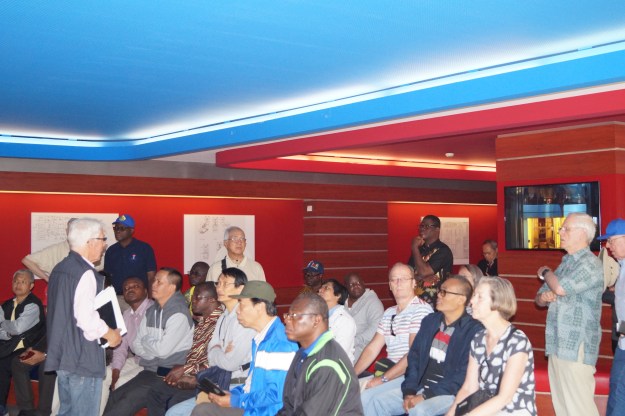
The first place we visited was MEYER WERFT, (in Papenburg), a shipbuilding company in Germany.

Floatation Classroom

Founded in 1795, Papenburg-based MEYER WERFT has meanwhile been owned by the seventh generation of the Meyer family. This well-established company has some 3,300 employees. MEYER WERFT’s extensive production program covers a wide range of ship types, from cruise ships, gas tankers and passenger ferries. In order to stay successful in worldwide competition, production technology has been continuously extended. Today, MEYER WERFT has the most modern production premises in the shipbuilding industry.

Meyer Werft Shipyard

Building cruise ships is a particularly complex task compared to other industries. One cruise ship is a highly complex, large-scale project that must satisfy customer requirements as well as meet stringent safety regulations. Each cruise ship is made of more than 10 million individual parts and assemblies, compared to about one million parts for today’s largest passenger airplanes and about 10,000 parts for a car. The complexity, diversity and large volume of data involved require efficient solutions to design and build ships that stand out from those of competitors. Meyer Werft can efficiently manage this complexity while ensuring high quality standards that, ultimately, help its cruise line customers offer a best-in-class passenger experience.

It was a very enjoyable two-hour tour, including a view of the ships in progress. It is an insightful experience and a well worth visit. A perfect place for a company of friends.

LUNCH

After the shipyard tour, we had our Lunch together at the Gasthof Tepe restaurant in Aschendorf, about 6 km away from Papenburg, Germany.

BOURTANGE FORTRESS

The next place tourist site we visited was the Bourtange fortress – also referred to as the fortress that was never conquered – a unique historical defences which is without comparison.

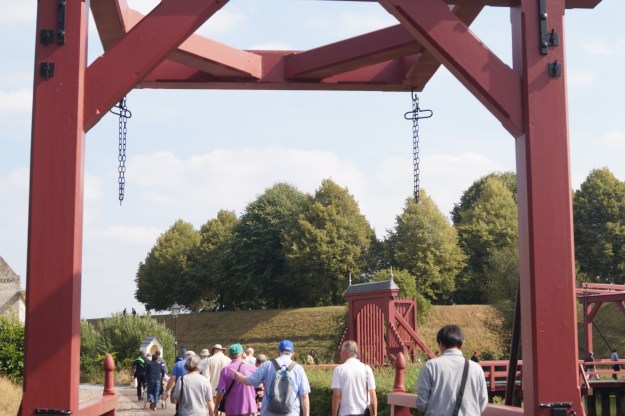
Rich in history, Vesting Bourtange dates back to 1580 when Willem van Oranje ordered an entrenchment be built with five bastions near the Dutch-German border. Build on a sandy ridge or ‘tange’ (in Dutch) it was completed in 1593. Over the centuries it was continually reinforced but as over time it eventually lost its military status and was dismantled by 1851. Since then it has grown into an agricultural village which is teeming with history. Bourtange is located southeast of Groningen, not far from the German border, making it a fun day trip if you are in the area. Its cobblestone roads, historic canons and wooden drawbridges allow your imagination to wander back in time.


We spend our time walking around the high ridges that line the village, a water canal on one side and the town in the centre. Stunning views and fields as far as the eye could see made us feel as if we really were protected from the rest of the world. Visiting Bourtange, you walk through the so called ‘Vriesse gate’ or ‘Münsterse gate’, depending from which way you enter, following the road to the picturesque Marketplace. This square is surrounded by fourteen 300 years old lemon trees. Along with museums, Bourtange also has an Inn which would allow you to actually stay overnight and enjoy the fortress for a little bit longer. We made sure to visit the “candle maker” and also enjoyed watching the residents having their relaxation in the gardens. We eventually made our way to the centre square where there were several restaurants available.

Bourtange Street Walk

The tour continued with the Protestant Church, the Jewish Synagogue and windmill and then a little relax time watching the swans go by. The video makes it look massive, but in all reality, it was quite a bit smaller than we expected. In this small cosy village (Bourtange), the present day and past centuries go together perfectly giving you a sense of appreciation of one’s own historical and cultural background. Regardless it was a beautiful place to visit and a great way to expose young people to history. No theme parks, no rides, just exploring and wandering the streets of this century’s old fortress. I highly recommend Bourtange for family outing.

SUPPER

We left Bourtange at 17:38 hours arriving in De Lutte-Loser at about 18:50 hours, where we took our supper together in the Cafe-Restaurant Keet’n Zwart.

BACK TO GENERAL CHAPTER VENUE

At 21:00 hours we left the restaurant (Keet’n Zwart) and arriving in Denekamp at 21:20 hours. That was how we spent the day.

BRIEF REFLECTION ON BEING TOGETHER

OUTING is one of the ways of expressing our fraternal solidarity with one another. As it is said in our Constitutions: “being together in hours of relaxation… is a sign of unity” (Article 45).

Thanks a lot, to Bro. Lo Koeleman for the practical arrangements he put in place to make the outing successful and joyful being together.